The most accurate way to see what Google actually counts is Google Search Console (GSC). Unlike third-party tools, GSC shows you the links that Google has indexed and is using for ranking purposes.
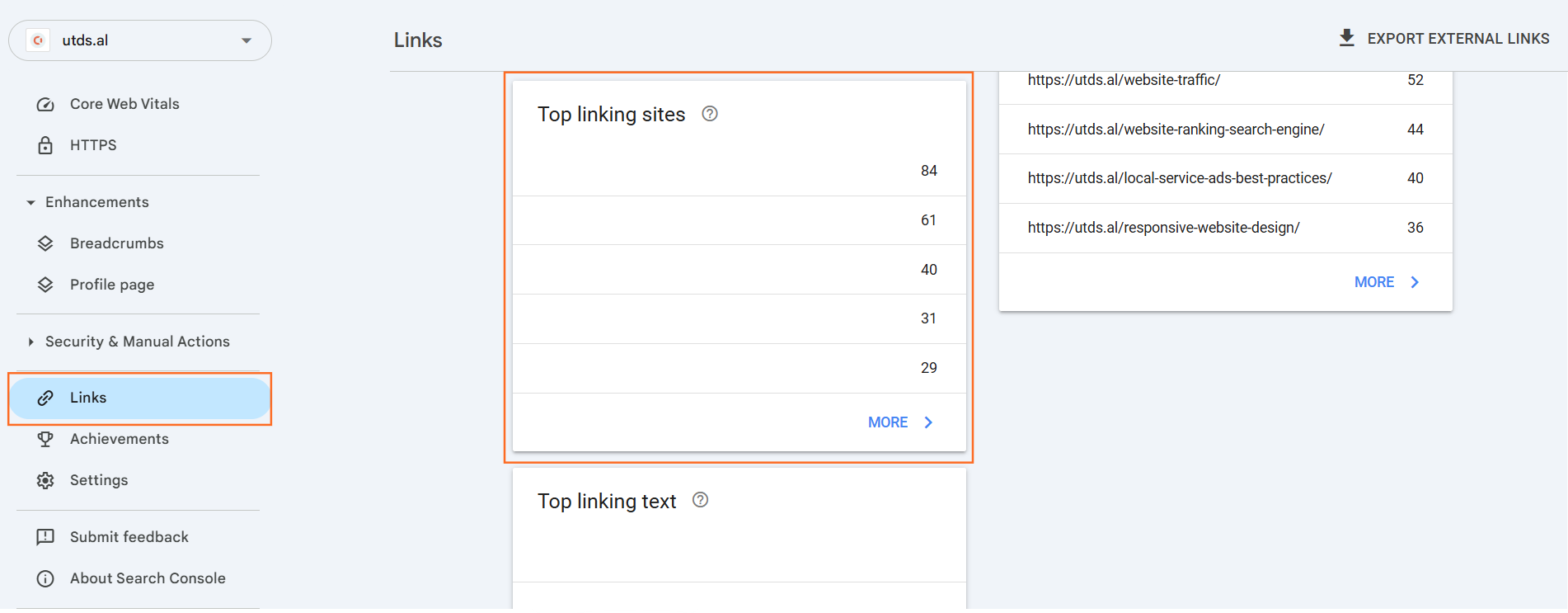
- Navigate: Go to Links in the sidebar.
- Top Linking Sites: Click “More” to see the full list of domains linking to you.
- Export: Download the “Latest Links” report as a CSV.
- Compare: You must manually compare this month’s CSV against last month’s to spot new additions, as GSC does not have a “New vs. Lost” dashboard.
Third-Party Intelligence (Ahrefs / Semrush)
While GSC is accurate, it is slow (often weeks behind). To monitor links in near real-time and crucially to spy on competitors, you need a dedicated SEO tool.
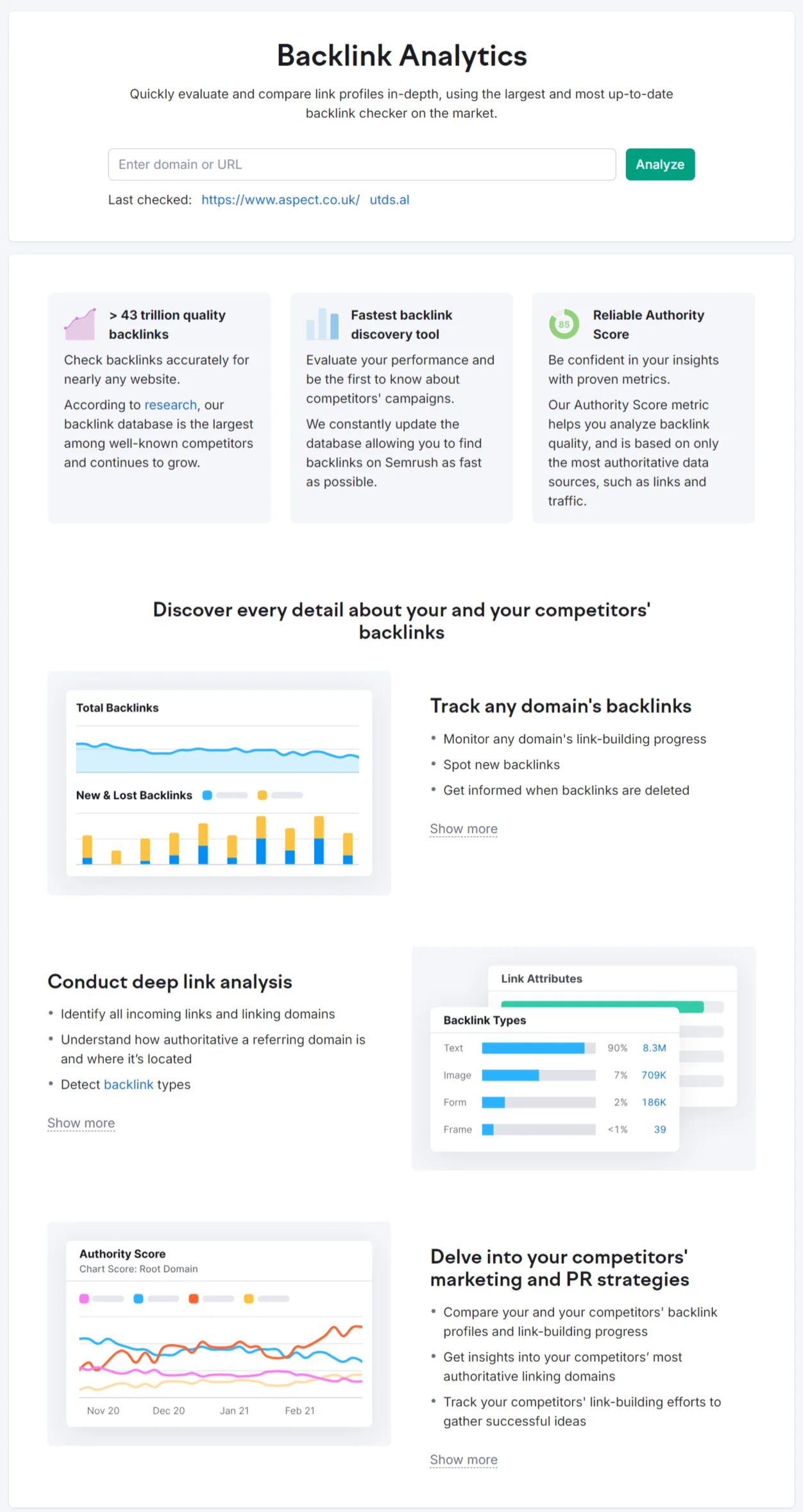
- Velocity: Tools like Ahrefs or Semrush have their own crawlers that update daily. They will show you a graph of “Referring Domains” over time.
- New vs. Lost: These tools explicitly highlight “Lost” backlinks. This is vital for reclaiming value if a high-authority site removes your link, you can email them immediately to ask why.
- Competitor Monitoring: You can set up projects to track your competitors. If they get a new link from The Guardian, you will know immediately and can try to get one too.
Setting Up Passive Alerts
You should not need to log in to a dashboard every day to check for links. Automate the process so you are notified of wins (or attacks) immediately.
- Ahrefs Alerts: Set up a “New Backlinks” alert. You will receive an email digest (daily or weekly) listing every new site that has linked to you.
- Google Alerts: This is a free alternative. Set up an alert for “yourbrandname”. While this tracks mentions rather than strict links, a mention is often a precursor to a link (or an unlinked mention you can claim).
- Monitor Anchor Text: Set an alert for “spammy” anchor text terms (e.g., gambling or pharmaceutical keywords). If you suddenly get 500 links with these anchors, you are under a “Negative SEO” attack and need to disavow them.
Assessing Link Quality (The “Toxic” Check)
Monitoring isn’t just about counting numbers; it’s about assessing value. A single link from a university (.ac.uk) is worth more than 1,000 links from low-quality directories.
When a new link appears, ask three questions:
- Is it indexed? If the linking page isn’t in Google, the link is worthless.
- Is it “Follow” or “Nofollow”? “Dofollow” links pass ranking power (PageRank). “Nofollow” links (from social media or Wikipedia) send traffic but do not directly boost SEO.
- Is it relevant? A link from a site in your industry is a strong signal. A link from a random foreign-language forum is usually spam.

 Salesforce