Local SEO keywords are search queries that include a geographical modifier (e.g., city, county, region).They capture high-intent users ready to engage with a business in their immediate vicinity.Finding and optimizing for these terms is essential for customers focusing on UK cities and local markets.
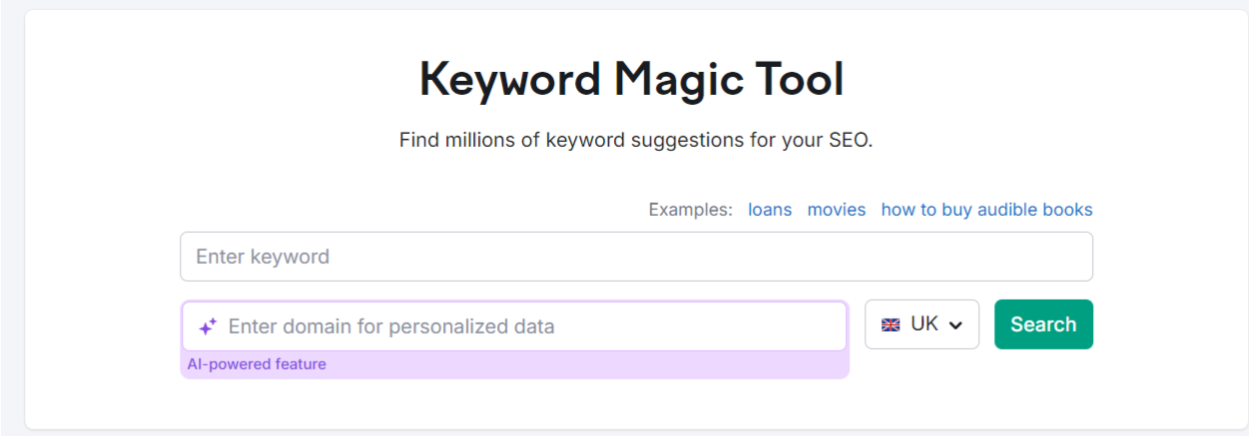
Step 1: Brainstorming Core Local Keyword Types
Start with the core services your client (or business) offers and combine them with location terms.
Keyword Type | Formula | Example | Intent Level |
Service + City | [Service/Product] + [City] | “Digital Strategy Consultants London” | High Commercial |
City + Service | [City] + [Service/Product] | “Manchester SEO Agency”** | High Commercial |
“Near Me” | [Service] + “Near Me” | “SEO Audit Near Me” | Immediate/Transactional |
Regional/County | [Service/Product] + [County/Region] | “B2B Content Marketing West Midlands” | Moderate Commercial |
Problem/Solution | [Problem] + [Location] | “Website not ranking Birmingham” | High Informational/Commercial |
Step 2: Optimal Local Keyword Research Tools
You need tools that can isolate search volume and competition for specific geographic areas within the UK.
Tool/Method | Focus | Optimal Use Case for UTDS Clients |
Google Autocomplete | Real-time suggestions from Google. | Start typing your service + a city name (e.g., “SEO London“). Google suggests common user searches. This is free and accurate for intent. |
Google Ads Keyword Planner | Provides highly reliable volume data. | Set the Location filter to a specific UK city, county, or region. This tool provides the most accurate local search volume for paid and organic strategy. |
Competitor Analysis | Identifying your local rivals’ top-ranking terms. | Use site audit tools (like Semrush/Ahrefs/SEranking) to audit the local competition. Filter their top keywords by location to see what’s driving their traffic (e.g., filtering keywords by “Glasgow” for a competitor). |
Google Maps | User-generated business searches. | Search your core service on Google Maps. The top results show exactly what Google associates with that search in that geographic area. |
Step 3: Integrating Local Keywords for Optimal Ranking
Finding the keywords is only half the battle; integrating them correctly is essential for ranking locally.
- Google Business Profile (GBP) Optimization: This is the single most important local factor.
- Ensure your business name, address, and phone number (NAP) are consistent across the entire web.
- Use keywords naturally in the business description and services list.
- On-Page Optimization (City-Specific Pages):
- Create dedicated, unique content pages for key service areas (e.g., a “Digital Strategy Services in London” page, a “Strategy Consulting in Manchester” page).
- Use the primary local keyword in the page’s Title Tag, H1 Heading, and the URL slug.
- Local Citations and Links:
- Get listed in reputable UK local directories (Yell, Thomson Local) and industry-specific directories.
- Seek backlinks from local UK businesses or publications. This signals to Google that you are a relevant entity in that local ecosystem.

 Salesforce