1. Google Trends (The “5-Year” Rule)
The most effective free tool for identifying seasonality is Google Trends. However, most people use it incorrectly by only looking at the “Past 12 months.” To confirm a true seasonal pattern, you must look at the Past 5 years.
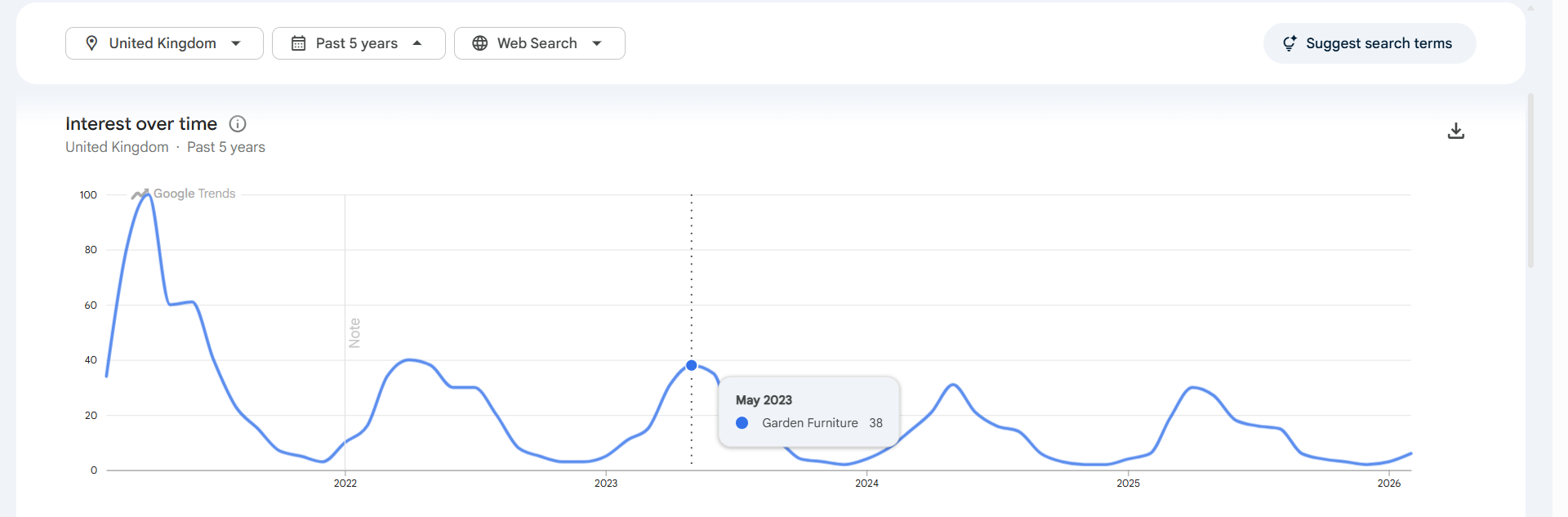
- Search: Enter a broad term like “gym membership” or “garden furniture.”
- Filter: Change the date range from “Past 12 months” to “Past 5 years”.
- Analyze: Look for a “heartbeat” pattern, a spike that happens in the same month every single year.
- Example: “Gym membership” spikes every January (New Year’s Resolutions).
- Example: “Boiler repair” spikes every November (First frost).
If you only look at 12 months, you might mistake a one-off viral event (like a news story) for a seasonal trend. The 5-year view proves it is a recurring human behavior.
2. Google Search Console (Year-Over-Year Analysis)
Your own website data is a goldmine. You can see exactly when your specific audience starts searching for seasonal topics.
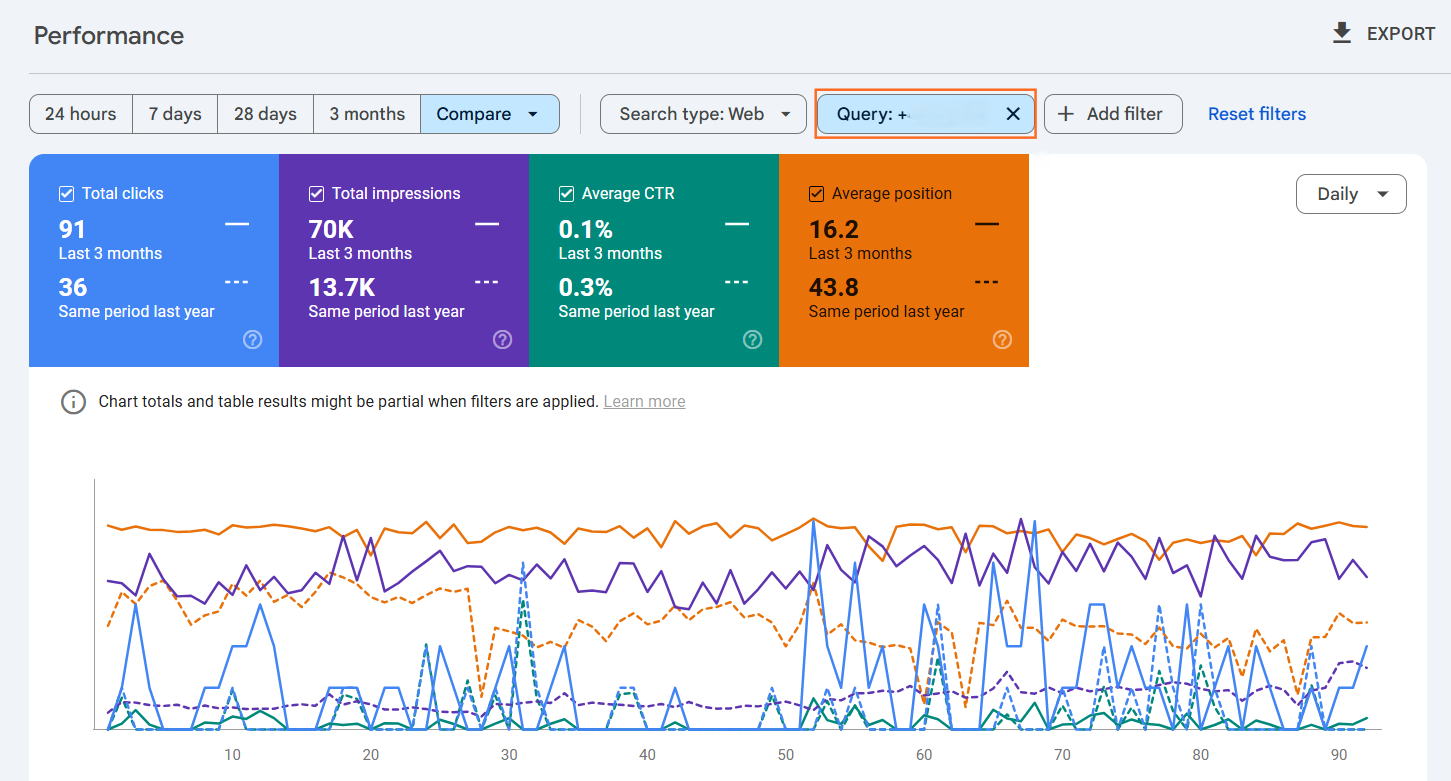
- Navigate: Go to Performance > Search results.
- Date Range: Click Date > Compare > Compare last 3 months year over year.
- Filter: Click Query and type a seasonal word (e.g., “Christmas” or “Summer”).
- Review: Look at the “Impressions” column. Did your impressions start climbing in September or October last year? That is your “start date” for this year.
3. Third-Party Tools (Semrush / Ahrefs)
Professional SEO tools simplify this by calculating a “Seasonality” metric for you.
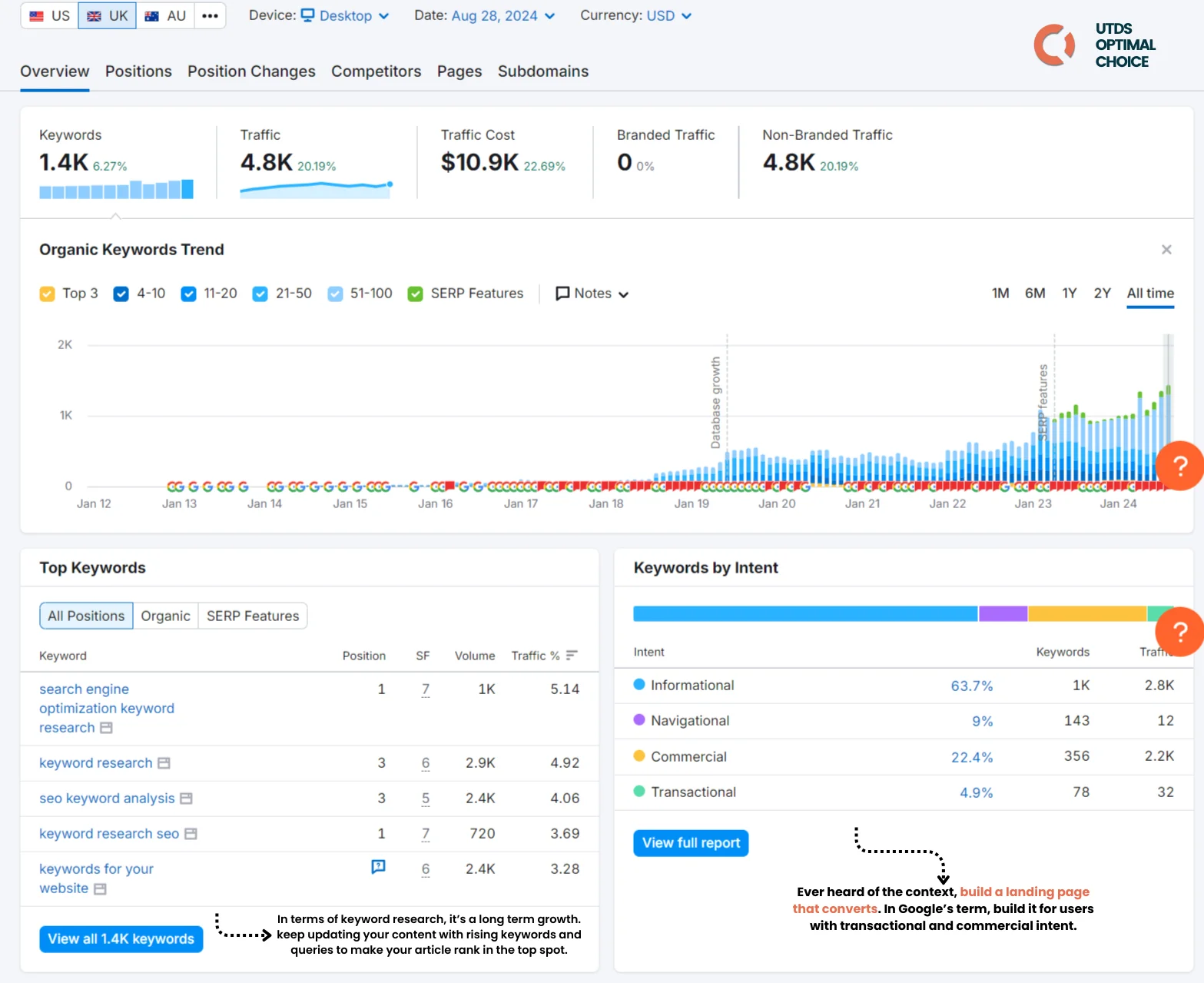
- Keyword Overview: Enter your target keyword into Semrush or Ahrefs.
- Trend Bar: Look at the “Trend” or “Volume History” bar chart.
- Identify Peaks: Even if the average volume is 1,000, the tool might show that 80% of that volume happens in July.
- Action: prioritizing a high-volume keyword that peaks in December is a waste of time if you are doing the research in January.
- Action: prioritizing a high-volume keyword that peaks in December is a waste of time if you are doing the research in January.
4. The “3-Month Lead Time” Strategy
Finding the trend is useless if you act too late. You cannot publish a “Christmas Gift Guide” in December; by then, the competition is too high and Google has already indexed the winners.
You must publish content 3 months before the peak.
- Peak: December -> Publish: September.
- Peak: July (Summer) -> Publish: April.
This gives Google’s crawlers time to index, understand, and rank your content so that when the user search volume spikes, you are already at the top of the wave.

 Salesforce