Choosing keywords isn’t about guessing; it’s about validating that real people are searching for those terms, especially within your target UK market. This process ensures your content addresses genuine user intent and possesses traffic potential.
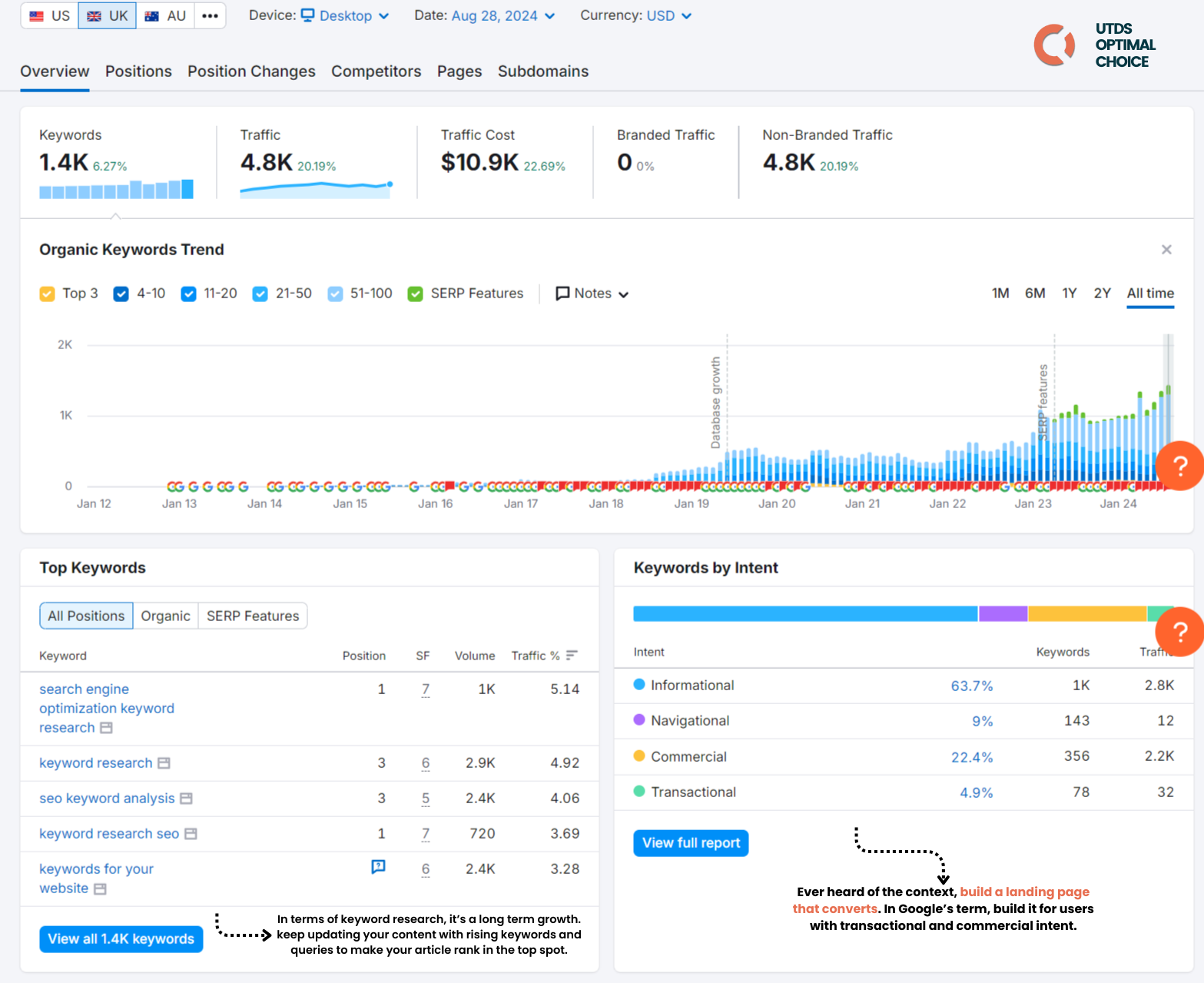
Step 1: The Principle of Search Volume (Demand)
Search volume is the most critical metric for validating a keyword. It represents the average number of times a term is searched within a specific time period (usually per month) in a designated geographic area.
- Optimal Metric: Use tools like Google Keyword Planner (GKP) or established third-party tools (Semrush, Ahrefs) to check the monthly search volume.
- Targeting: Always set your tool’s location to the specific area you serve (e.g., United Kingdom, London, or Scotland) to ensure the volume data is relevant to your market.
- The UTDS Approach: Prioritize keywords with a volume range that balances demand and competition. A term with 100-1,000 monthly searches is often more valuable for an initial strategy than one with 50,000+ searches, as the former is typically easier to rank for.
Step 2: Validating Intent (The “Why”)
People search for four main reasons. Your keyword must align with the user’s intent to be truly valuable and convert well.
User Intent | Searcher Goal | Keyword Structure Example | Optimal Content Match |
Informational | To learn or find an answer. | How do I, What is, Best way to… | Blog Posts, Guides, Knowledge Base articles answering the question. |
Navigational | To find a specific website or entity. | UTDS Optimal Choice login, Google Search Console | Homepage or Contact/About pages. |
Commercial | To research a product/service before buying. | Best SEO tools, Top UK Digital Consultants | Comparison Pages, Reviews, Service Overviews highlighting UVP. |
Transactional | To buy or complete an action immediately. | Buy SEO Audit, Sign up for Strategy Session | Pricing Pages, Free Trial Pages, Contact Forms (high conversion goal). |
Optimal Rule: A keyword is only valuable if you can create content that precisely matches the intent. If a keyword is informational, don’t use it on a transactional page.
Step 3: Using SERP Analysis for Final Validation
The Google Search Results Page (SERP) is the final authority on what people search for and what Google deems the best answer.
- Search the Keyword: Type your potential keyword into Google (ensuring you are using a non-personalized, UK-based search).
- Analyze Top Results:
- Content Type: Are the top results mostly blog posts, product pages, or news articles? This confirms the optimal intent Google has assigned to the term.
- People Also Ask (PAA): Look at the “People Also Ask” box. The questions listed here are highly relevant, related searches that people actually perform. These make excellent H2 headings or supporting content for your main page.
- Related Searches: Check the suggestions at the bottom of the SERP. These are additional, related keywords that actual users are pivoting to, often revealing new long-tail opportunities.

 Salesforce